
Part 1 – The Problem
Camera movement is a tool used by filmmakers to add massively to scenes. To the filmmaker, camera motion can take a boring shot and turn it into an impactful moment. On the other hand, to the VFX artist, camera motion can take a straightforward shot and turn it into a nightmare. In this series we’ll be tackling this topic in depth by looking at: Firstly, what the issue is – secondly, how the issue would have been dealt with in the past – and thirdly, how the issue is being dealt with in the modern day in two different ways.
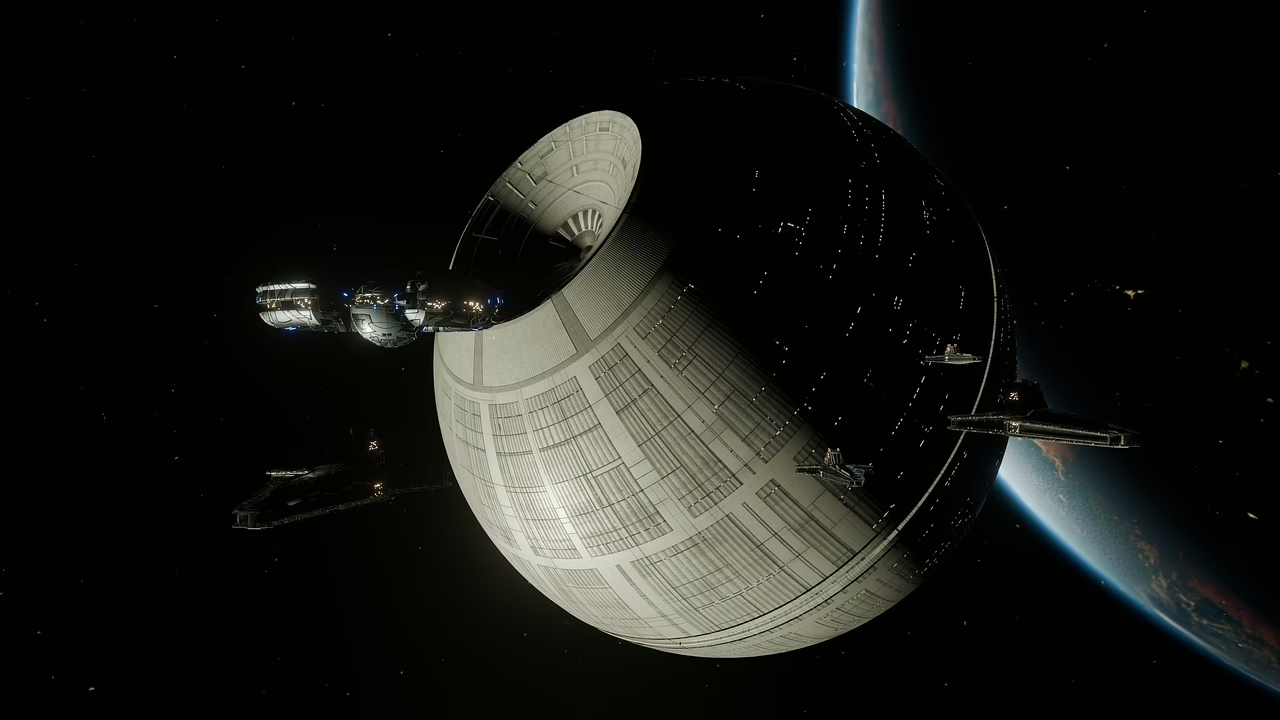
When talking about practices in VFX (Visual Effects), I generally find that it is most exciting to look at practices and techniques by looking at popular films that have employed the very practices and techniques that we’re looking at. For that reason our focus in this series will be on the Star Wars films and how they tackled (and are continuing to tackle) the problem of matching camera movement. Whether or not you think that the story and the world portrayed in the Star Wars films are good, it is undeniable that the use of technology to tell these stories was truly spectacular for the time.
The Problem
Earlier I mentioned that camera movement can turn adding new elements to video footage into a nightmare for a VFX artist. Why is this?
When you overlay some type of imagery over a video, you can position it correctly and match it up perfectly. This imagery could look perfectly nestled into the shot as if it had been there all along. What happens when you move the camera? It looks like everything that the camera can see is moving around with the camera motion. Well… not quite everything. The imagery that you overlaid and matched is staying in one place and suddenly the illusion is ruined. It doesn’t take a rocket scientist to understand that when the camera moves, everything that is being recorded should appear to move around in the video.
This means that we need some way to match the position of the imagery to the background video not merely for just one frame but rather for the entire length of the background video. The imagery has to move in the exact way that the background seems to move in light of how the camera was moving when the video was recorded.
That is the problem that has faced filmmakers and VFX artists for a great many years now. Over the next while, we’ll consider some of the solutions.